
Bolts, nuts and washers explained: a practical identification guide
Know the part. Get the fit right.
Real examples from our range, with the measurements and pack choices that matter.
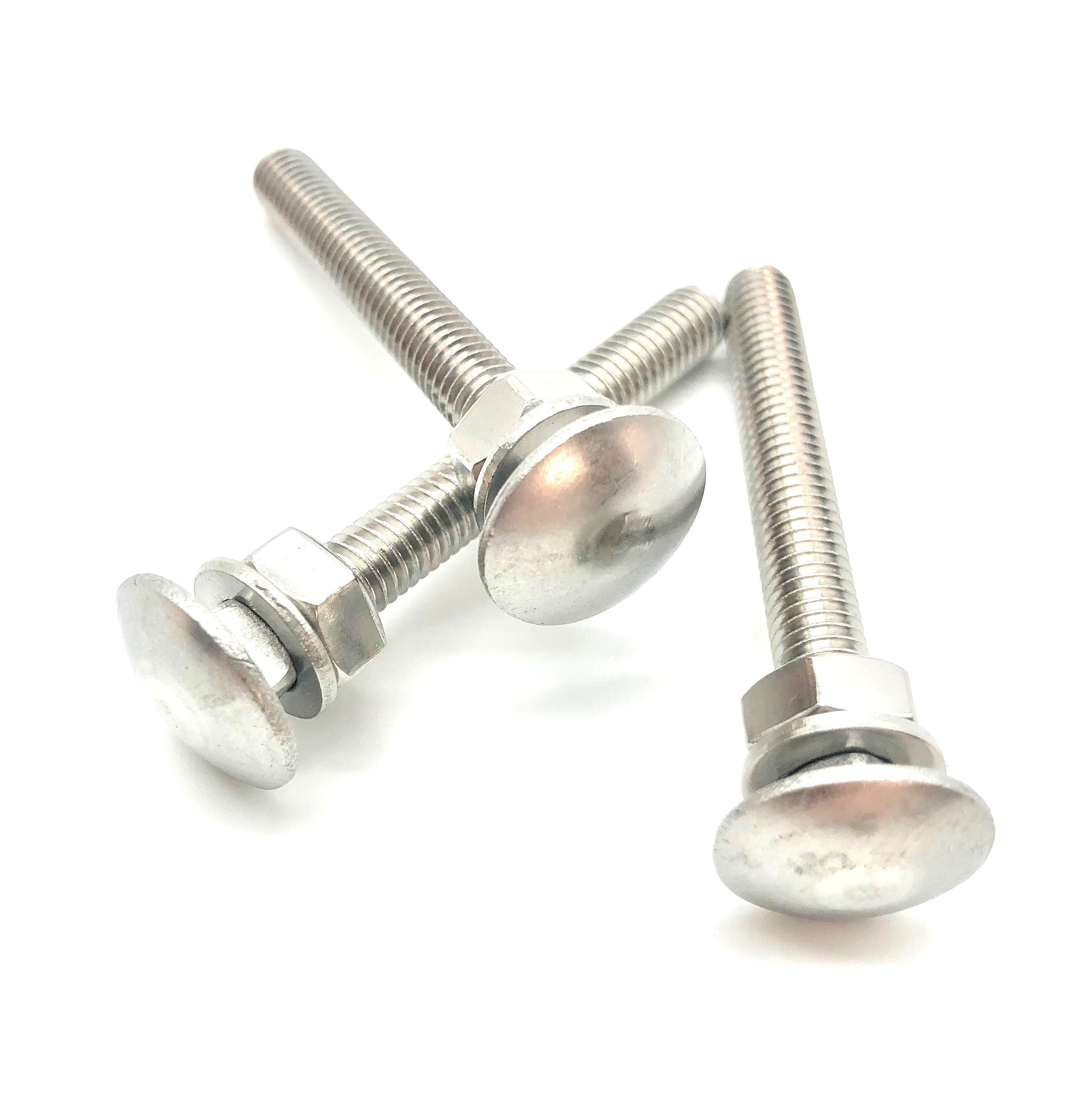
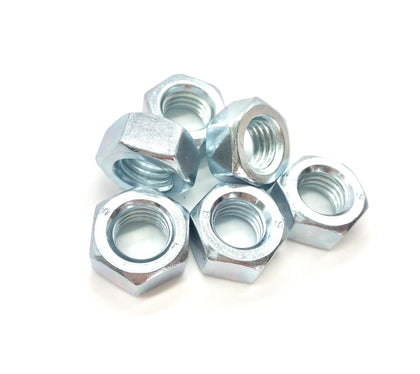
Before you order a missing bolt, nut or washer, identify the part and write down its measurements. Check the thread on bolts and nuts, and the hole size, outside diameter and thickness on washers. Then compare the product options and pack quantities.
A useful starting point is the fixing you already have. Keep an intact example from the same assembly, if there is one, alongside the manufacturer's parts list.
Which part do you need?
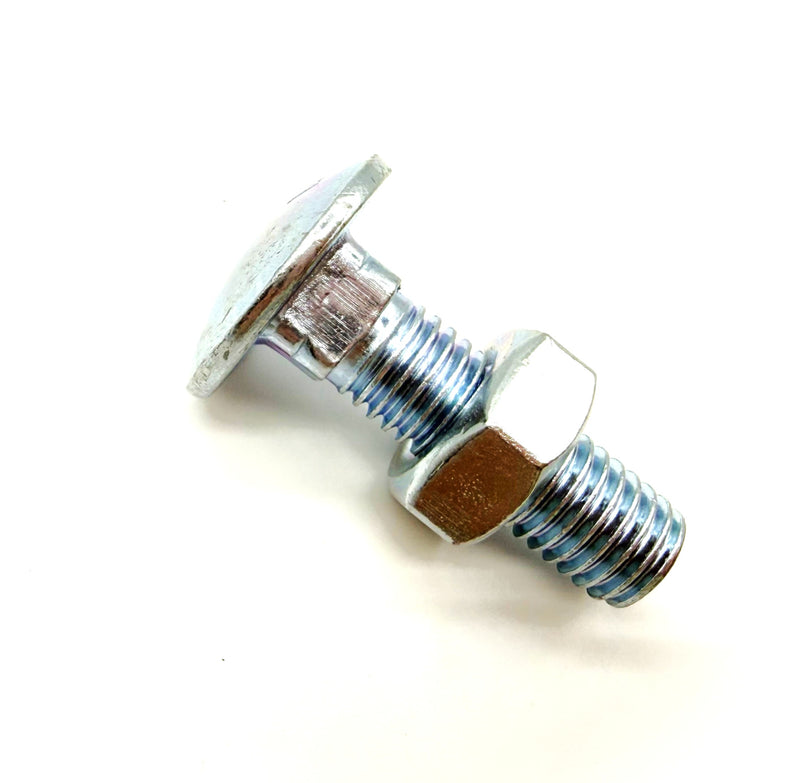
Bolt or machine-threaded screw
A shaft with an external thread, usually with a head at one end
- Details to compare
- Thread specification, length, head style and usable thread
Nut
A threaded hole inside the part
- Details to compare
- Thread specification, nut style and body dimensions
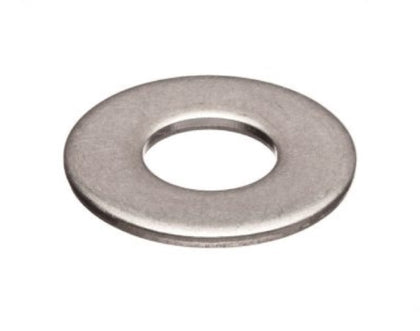
Flat or penny washer
A disc with an unthreaded centre hole
- Details to compare
- Hole size, outside diameter, thickness and material
These photographs show different fixing families, not a matching set.
In a through-bolt joint, the nut engages the bolt's thread. A washer sits under the head or nut where the assembly calls for one and provides a bearing surface. Some fixings screw into a threaded hole instead, so they do not need a separate nut. See the basic fastener reference for these distinctions.
Once you know the part family, our Bolts, Nuts & Washers range is the starting point.
Bolts: check the head, length and thread
A hex-head bolt has a six-sided head. A coach or carriage bolt has a rounded head with a square section underneath. Furniture connector bolts have a different role again: they form part of a particular furniture joint.
Start in the Bolts collection when comparing these families. For a missing part from flat-pack or cabinet furniture, our furniture connector guide helps narrow the choice.

M6 x 60mm connector bolts
Our M6 x 60mm joint connector bolts have 40mm of thread and a 20mm plain section below the head. That distinction matters when replacing a bolt: 60mm long does not mean 60mm of usable thread.
Check the head, length and thread against the original fitting before choosing this option.
M6 × 60mm · Pack of 10 bolts
View this packNuts: match the body as well as the thread
Hex nuts have a six-sided body. Wing nuts have two projecting wings. Barrel nuts, also called cross dowels, have a cylindrical body with a threaded hole across it.
That body shape is part of the specification. A barrel nut needs to fit the furniture hole and line up with the incoming bolt. A conventional hex nut is not a substitute simply because the thread size matches.
Use the Nuts collection to compare the available types.

M6 barrel nuts
Our M6 barrel nuts have a 25mm-long body and a 10mm outside diameter.
Compare those body dimensions and the position of the threaded hole with the furniture, as well as checking the M6 thread.
25mm body · 10mm outside diameter · Pack of 10 nuts
View this packDoes the furniture joint need both parts?
If your furniture uses a connector bolt and barrel nut, compare the M6 barrel nut alongside the M6 x 60mm connector bolt. Check the thread, bolt length, nut body size and hole position against your furniture before ordering.
Replace the missing or damaged part; you may not need both. The packs above are sold separately. They are not a combined kit.
Washers: the outside diameter can decide the fit
A washer can fit over a fixing and still be too wide for the space around it. For example, a wide washer may catch the sides of a recessed fitting instead of sitting flat.
A penny washer has a wider face than a standard flat washer. When the assembly calls for one, check the room available as well as the centre hole. Compare the Washers range, or go straight to Penny Washers for the wider form.
An example from our range: M4 penny washers

The washer photograph shows an assortment. Product photographs throughout this guide are not to a shared scale. The M4 washer example is separate from the M6 furniture parts above.
Our M4 penny washer options illustrate the difference:
M4 x 15mm outside diameter
- Centre hole
- 4.2mm
- Thickness
- 1.5mm
10 washers for £0.89
M4 x 25mm outside diameter
- Centre hole
- 4.2mm
- Thickness
- 1.5mm
10 washers for £1.29
Both have the same listed centre hole and thickness, but the 25mm option occupies more space. Choose the outside diameter that the fitting needs, rather than the largest one available.
For more on the washer itself, read what penny washers are and how to choose them.
Does M6 mean the parts will fit together?
M6 identifies a nominal metric thread diameter. It does not describe the outside width of a nut or confirm the whole assembly will fit.
Thread pitch also matters. Metric pitch describes the spacing between adjacent threads. Record the thread system, diameter and pitch when matching a bolt and nut, then check the remaining dimensions. A spanner size is a separate measurement. The fastener identification reference explains those attributes.
Washer size labels are different again: an M4 washer label does not mean its centre hole measures exactly 4mm, as the 4.2mm example above shows. See the size-notation reference.
Our conversion reference can help you read inch and metric dimensions. Converting a number does not make an imperial thread compatible with a metric one.
Check the pack before you order
Count the parts needed for the job, then compare the selected pack quantity and price. Check bolts, nuts and washers separately: a pack of one does not include the others unless the listing says so.
For repeat jobs, comparing the price per part can help. For a one-off repair, a larger pack may leave you paying for parts you do not need.
Prices shown include VAT and were checked on 6 September 2026. They apply to the exact options and pack quantities above. Other options may cost more or less; check the current product page before ordering. Delivery is separate.
Your replacement-part note
Write these details down before choosing a product option:
- What the part belongs to and which component is missing.
- The part family, head or body shape, and any markings.
- Thread system, diameter and pitch for threaded parts.
- Length and usable thread length where relevant.
- Washer hole size, outside diameter and thickness where relevant.
- Material, finish and any grade required by the original assembly.
- How many of each part you need.
If a measurement or specification is unclear, keep the original part and ask for help identifying it. For structural or safety-critical work, follow the equipment or fixing manufacturer's specification.
With those details to hand, compare the Bolts, Nuts & Washers range and choose the pack that fits the job.